
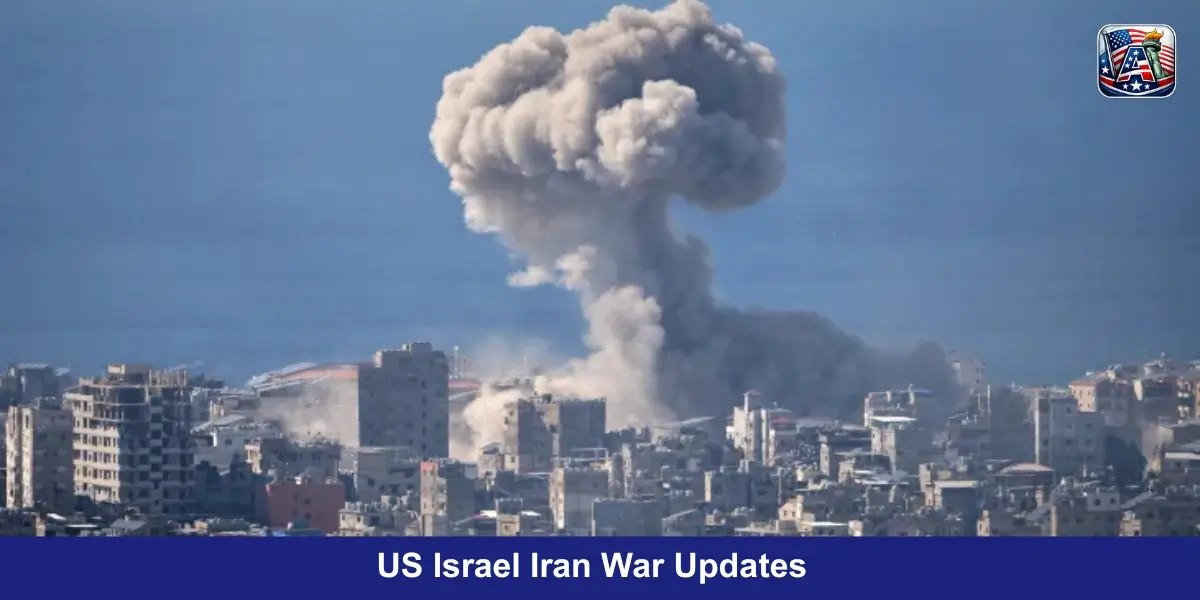
US Israel Iran War Updates
The US Israel Iran war updates mark one of the most consequential conflicts in recent Middle Eastern history. What began as a limited set of airstrikes on 2026, by the United States and Israel against Iranian targets quickly escalated into a full-blown regional confrontation. Iran retaliated with missile and drone strikes, while Hezbollah in Lebanon launched rockets into northern Israel, creating multiple fronts of conflict. The war has sent shockwaves across the Middle East and the globe, affecting energy markets, displacing hundreds of thousands of civilians, and raising concerns about a wider international escalation.
Global oil markets have been thrown into turmoil. The Strait of Hormuz, through which one-fifth of the world’s oil passes, has become a focal point of the conflict. Iran has restricted passage for ships benefiting the United States and its allies, leading to tanker attacks, port closures, and fears of prolonged disruptions. Oil prices surged past $100 a barrel despite emergency releases from strategic reserves, and gasoline prices in the United States rose sharply. Beyond the economic impact, civilians in Iran, Lebanon, and the Gulf have borne the brunt of the conflict, with schools, hospitals, and residential areas struck, creating a massive humanitarian crisis.
Origins of the US-Israel-Iran Conflict
The war erupted when the U.S. and Israel launched coordinated airstrikes on February 28, 2026, targeting Iran’s missile launch sites, military command centers, and infrastructure linked to the Islamic Revolutionary Guard Corps. These strikes were aimed at reducing Iran’s capability to project force across the region. In a shocking development, Iran’s Supreme Leader Ali Khamenei was reportedly killed during the early strikes, prompting Tehran to appoint his son Mojtaba Khamenei as successor.
Iran immediately vowed retaliation. The strikes, while initially described as limited, touched the very core of Iran’s political and military leadership, signalling the start of a multi-front war that extended far beyond the borders of Iran. International reactions were mixed. Some allies of the U.S. cautiously supported the goal of disabling Iran’s missile capability, while others condemned the attacks as violations of international law. Tehran labelled the strikes as unprovoked aggression, promising a decisive response.
Iranian Counterstrikes and Regional Escalation
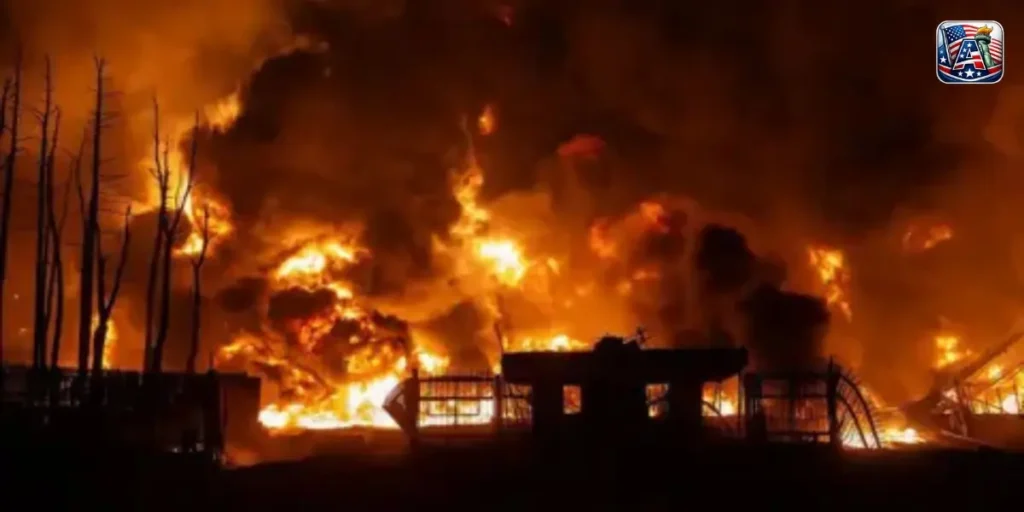
Iran responded swiftly with ballistic missile and drone strikes targeting Israeli military bases and urban areas. Israeli missile defense systems intercepted many projectiles, but some penetrated residential zones, causing casualties and property damage. Iranian-aligned militias in Iraq began targeting U.S. bases, while Hezbollah in Lebanon launched rockets into northern Israel.
The conflict quickly expanded into a broader regional confrontation. Saudi Arabia intercepted drones targeting its oil fields, and Oman was forced to close a key oil terminal at Mina Al Fahal. Italian and U.S. military bases in Iraq came under attack. The war’s rapid escalation demonstrated Iran’s regional reach and the involvement of multiple proxy forces, making a diplomatic solution increasingly complex.
Civilian Impact and Humanitarian Crisis
The humanitarian consequences have been severe. In Iran, a U.S. airstrike on a girls’ school killed 175 civilians, most of them children, based on outdated targeting information. This tragic event sparked international outrage and highlighted the dangers faced by civilians in modern warfare.
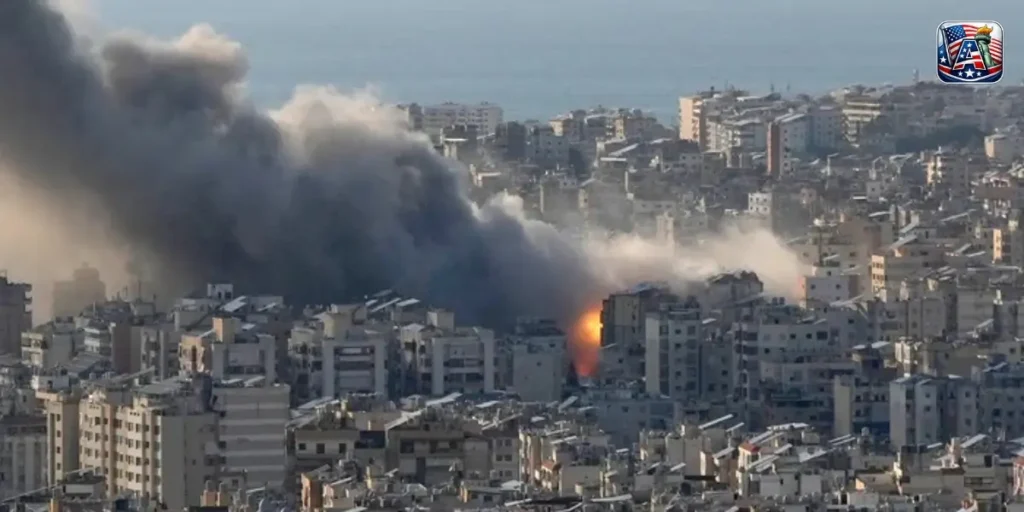
Lebanon has also suffered greatly. Israeli strikes against Hezbollah strongholds in Beirut and southern Lebanon displaced over 800,000 civilians. Bombing destroyed homes, infrastructure, and public buildings, while hospitals struggled to accommodate casualties. Entire neighborhoods, including densely populated areas in southern Beirut like Dahiya, were reduced to rubble.
In Iraq and Gulf nations, attacks on oil tankers and ports disrupted commercial activity. Oman’s key oil terminal closure and missile strikes on Italian and U.S. military bases in Erbil created additional security concerns. Civilians across the Middle East faced threats not only from direct military strikes but also from disrupted services, shortages, and infrastructure damage.
Key Military Fronts and Strategic Strikes
The conflict has multiple fronts: U.S. and Israeli forces carried out precision airstrikes on Iranian missile sites, command centers, and air defense installations. Iran responded with ballistic missiles and drones aimed at Israel and U.S. bases in the region.
Hezbollah’s rocket attacks created a proxy war in Lebanon, while Iranian drones and missiles struck Gulf nations, including Saudi Arabia and Bahrain. The strategic objective for Iran appears to be deterring further attacks, disrupting U.S.-Israeli operations, and demonstrating its ability to influence regional dynamics.
Israel targeted over two dozen sites in Lebanon, including residential areas suspected of housing Hezbollah infrastructure. Casualties continue to rise, and entire neighborhoods remain unsafe for civilians. U.S. and allied forces destroyed 16 Iranian mine-laying vessels in the Strait of Hormuz, attempting to prevent further attacks on commercial shipping.
Impact of the US-Israel Strikes on Iran
The US and Israel strikes have had profound effects across Iran, both militarily and economically:
- Iranian civilian casualties have reportedly exceeded 1,348, with thousands injured.
- Major cities, including Tehran and Beirut, have experienced airstrikes, causing widespread fear and displacement.
- Iranian oil exports have been disrupted, with Iran threatening to block shipments through the Strait of Hormuz, affecting global oil prices.
- The conflict has prompted bank closures and threats against financial institutions in the region.
- Drone attacks and missile strikes on Basij militia checkpoints have increased internal insecurity.
- Read more: US-Israel-Iran war updates: Strikes, oil, and impacts
The Strait of Hormuz and Maritime Threats
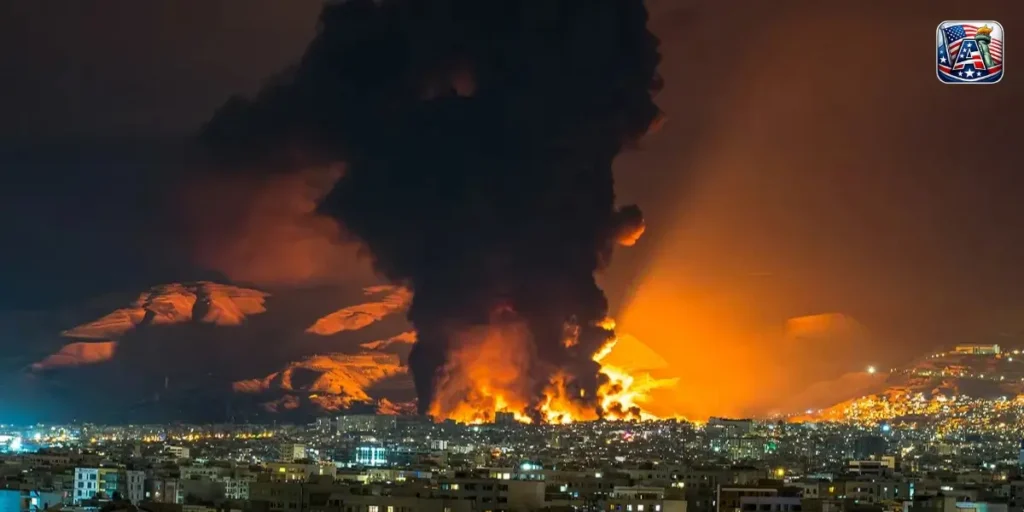
The Strait of Hormuz has become a focal point of the conflict. Nearly 20% of global oil passes through this narrow waterway. Iran announced it would block tankers benefiting the U.S. and its allies, and several merchant vessels were attacked. Two oil tankers off Iraq’s coast, Safesea Vishnu and Zefyros, were hit in ship-to-ship transfer areas, causing fires and casualties.
Iran’s deployment of naval mines mirrors tactics from the 1980s tanker war with Iraq, when minefields disrupted commercial shipping and endangered naval vessels. U.S. forces destroyed 16 mine-laying ships, but the risk of additional mines remains. Shipping routes were forced to bypass the Gulf, traveling around Africa, increasing freight times and insurance costs.
Global Oil Market Disruptions
The conflict caused unprecedented oil market volatility. Brent crude briefly surged above $120 per barrel, while U.S. West Texas Intermediate hit $91. In response, the International Energy Agency coordinated a release of 400 million barrels from strategic reserves, including 172 million from the U.S., to stabilise global markets.
Despite these measures, gasoline prices in the U.S. rose to $3.60 per gallon, diesel to $4.86, and inflationary pressures worsened. Global stock markets showed volatility, with energy stocks rising and broader indexes falling. Asian markets fell sharply, and European indices dipped due to concerns about rising fuel costs and regional instability.
Political Reactions in the United States
President Donald Trump delivered mixed messages during rallies in Kentucky, claiming early success but acknowledging that the U.S. mission was ongoing. Rising gas prices created political pressure, and Trump announced the release of oil from the Strategic Petroleum Reserve to help ease the burden.
Congressional pushback also emerged. Representative Thomas Massie co-authored a resolution to limit Trump’s war powers, which the president publicly criticised. These tensions reflect the broader domestic debate about the war’s duration, costs, and economic impact.
Global Oil Market and Economic Consequences
The war has caused significant disruptions to the global energy market:
- Brent crude briefly surged above $100 per barrel due to blocked shipping routes and attacks on oil tankers.
- The United States announced the release of 172 million barrels from its Strategic Petroleum Reserve to stabilize prices.
- The International Energy Agency (IEA) coordinated a global release of 400 million barrels of oil to counter supply shocks.
- Gasoline prices in the US increased by over 60 cents per gallon since the start of the war.
- Key oil export terminals in Oman and Iraq were closed temporarily after attacks on tankers and ships in the Persian Gulf.
Iran’s Strategic Messaging and Demands
Iran has consistently framed its military operations as defensive. Tehran’s leadership emphasises its right to retaliate against aggression and uses the disruption of the Strait of Hormuz to gain leverage in any potential negotiations. Iran has presented three conditions for ending hostilities: recognition of its rights, reparations for damages, and international guarantees against future attacks.
Global Humanitarian Implications
The conflict has strained global humanitarian efforts. Blocked shipping routes, closed airspace, and rising freight costs hinder delivery of food, medicine, and shelter. Lebanon and Iran face overwhelmed hospitals and infrastructure damage, while displaced populations seek refuge. International agencies warn that crises in Yemen, Sudan, and other regions are exacerbated as aid delivery becomes more difficult.
Economic and Strategic Outloo
Experts identify three potential scenarios: the war could continue at high intensity, escalate into a broader regional conflict, or lead to negotiated ceasefires. Oil markets, global trade routes, and energy stability remain vulnerable. Civilian casualties and displacement are expected to rise, and the economic impact could reverberate worldwide.
Conclusion: The Enduring Consequences of the Conflict
The 2026 US Israel Iran war updates reflect a conflict reshaping the Middle East and the global economy. From relentless airstrikes and drone attacks to soaring oil prices and humanitarian crises, the war’s consequences are profound and far-reaching. Its trajectory will influence energy policy, regional geopolitics, and humanitarian priorities for years to come.
FAQs
Who is more powerful, Iran or the United States?
On paper and in global military rankings, the United States is significantly more powerful than Iran in terms of military budget, technology, personnel, and equipment. The U.S. ranks as the world’s top military power, with over 13,000 aircraft, a vastly larger defense budget, and advanced naval and air capabilities. Iran, while a substantial regional power with strong missile and drone forces, has a smaller and older fleet and lower defence spending, placing it well behind the U.S. in overall conventional military strength.
How many US troops are dead in Iran?
As of the latest reported US Israel Iran war updates, the United States has suffered about seven U.S. service member deaths in the conflict, mostly resulting from Iranian missile and drone strikes on bases where U.S. forces were stationed, particularly in Kuwait and Saudi Arabia.
Why did the US and Israel attack Iran?
The United States and Israel launched a large‑scale coordinated military operation against Iran on 28 February 2026. The stated aims included degrading Iran’s missile capabilities, countering its regional military influence, preventing further development of nuclear weaponisation, and attempting to remove leadership considered a strategic threat. The strikes were part of escalating tensions after years of proxy conflicts, missile exchanges, and disputes over Iran’s nuclear and military programs.
Who is more powerful, Iran or Israel in war?
In a direct military comparison, Israel has a technologically more advanced air force and defence systems and greater access to U.S. intelligence and equipment support. Iran has significant missile and drone capabilities and larger manpower, but Israel’s modern air force, advanced missile defences, and integration with U.S. forces generally give Israel a conventional military edge — especially in high‑technology areas such as precision strikes and air superiority.
How much is a bottle of Coke in Iran?
Retail prices for everyday consumer goods like Coca‑Cola can vary widely in Iran due to inflation and sanctions, but recent local estimates suggest a standard local bottle of Coke might cost roughly the equivalent of $0.50–$1.50 USD in Iranian rials, depending on location and exchange rates. This is not an official “war update,” but reflects typical street‑level pricing trends in Iranian urban areas before the war’s full economic impact. (Price estimates can change rapidly with inflation and sanctions.)
How many fighter jets are in Iran?
Iran’s air force operates a mix of older and limited aircraft, estimated at around 500 total aircraft, including ageing U.S.-made F‑14s, Soviet‑era MiGs and Sukhois, some Chinese types, and domestically produced designs. These fleets are smaller and less advanced compared to Western forces. In contrast, the U.S. has thousands of aircraft including F‑35s, F‑22s, F‑15s, bombers, and drones.
Who were the six soldiers killed?
Initial reports in early March 2026 confirmed that six U.S. service members were killed in the conflict following strikes by Iranian forces that hit U.S. bases and operations centres, particularly in Kuwait. These deaths were confirmed by U.S. Central Command and reported in mainstream news outlets. Later updates suggested the total has reached seven U.S. service members killed.
Who started the Iran war in 2026?
The Iran war in 2026 began on 28 February 2026, when the United States and Israel launched coordinated air and missile strikes against multiple Iranian military and strategic targets. These strikes, aimed at degrading Iran’s missile and nuclear capabilities and removing key leadership figures, triggered Tehran to respond with a series of retaliatory missile and drone attacks against Israeli and U.S. targets across the region, expanding the conflict.