
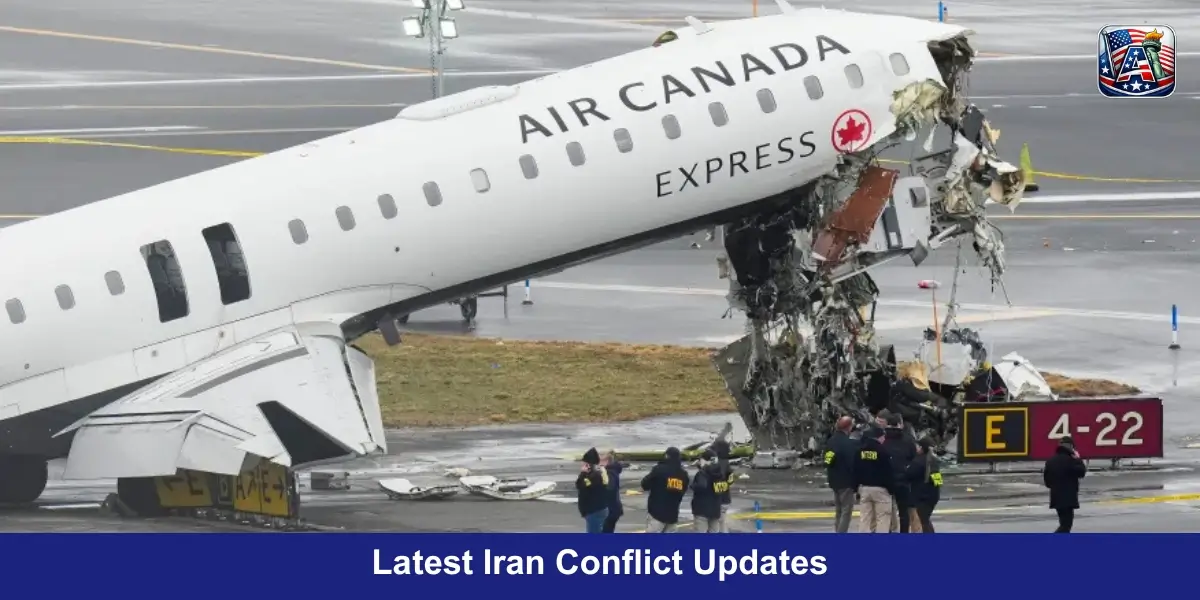
Air Canada LaGuardia crash 2026
Date: March 22–23, 2026
Location: LaGuardia Airport
Flight: Air Canada Express Flight AC8646 (Jazz Aviation)
Aircraft: Bombardier CRJ‑900LR (tail number C‑GNJZ)
Origin: Montréal‑Trudeau International Airport
Destination: LaGuardia Airport (LGA), New York, U.S.
In a shocking aviation disaster on the night of Sunday, March 22, 2026, a scheduled passenger flight from Montreal to New York’s LaGuardia Airport ended in calamity when the jetliner collided with an airport fire truck during landing, killing both pilots and injuring dozens of others. What makes this incident particularly alarming is that it happened on the ground during landing—not in the air—highlighting once again the persistent and dangerous problem of runway incursions. This detailed analysis looks into every aspect of the accident: timeline, causality, rescue, investigation, passenger experiences, safety implications, and how aviation authorities plan to prevent another tragedy.
The Flight: AC8646 — A Routine Journey Turns Tragic
Air Canada Express Flight AC8646 was a regular passenger service operated by Jazz Aviation, a regional partner of Air Canada Express. The aircraft was a Bombardier CRJ‑900LR, a narrow-body regional jet commonly used on short international routes across North America. The flight departed Montréal‑Trudeau International Airport in the evening of March 22, 2026, with 76 people on board—72 passengers and 4 crew members.
According to aviation records, Captain Antoine Forest, 30, was the pilot in command with extensive experience flying regional jets, while First Officer Mackenzie Gunther served as co-pilot. Both were Canadian nationals and well-regarded in the industry. The flight proceeded normally until its final approach into LaGuardia late Sunday night under rainy and low-visibility conditions.
Timeline of Events: From Landing to Catastrophe
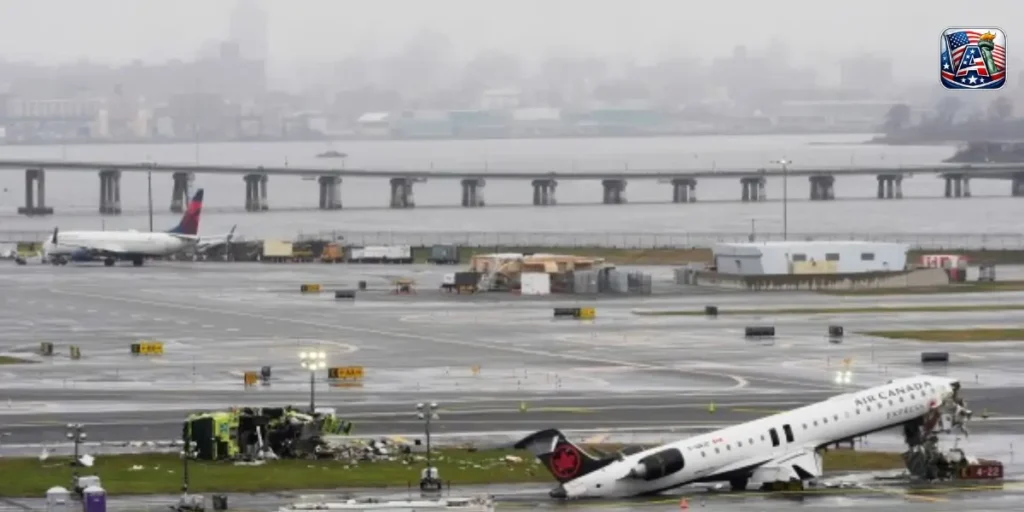
Final Approach — ~11:30 PM ET, Sunday, March 22
Flight AC8646 was cleared to land on Runway 4 at LaGuardia Airport. Weather conditions were reported as wet with light rain and limited visibility—conditions that require careful coordination between pilots and air traffic controllers.
While the aircraft was descending and just about to touch down, airport firefighters—part of the Port Authority Aircraft Rescue and Firefighting (ARFF) unit—were cleared onto the active runway in a separate operation. This was to respond to a different emergency involving another aircraft, believed to be a United Airlines flight that reported a possible odor issue.
The Collision — Moments from Touchdown
As Flight AC8646’s wheels met the runway surface, the CRJ‑900 collided head-on with the ARFF fire truck that was crossing the runway. Airport audio and communication recordings released later showed frantic calls from the tower:
“Stop — Truck 1, stop!”
Despite multiple warnings, there wasn’t enough time or distance for the truck to clear the landing path, and the aircraft struck the vehicle with tremendous force. Officials estimate the collision occurred at a high ground speed, with the aircraft still traveling fast along the runway even after touchdown. Videos from nearby cameras and eyewitness accounts suggest the impact sent debris scattering and left both the aircraft’s cockpit and the fire truck severely damaged.
Catastrophic Impact and Immediate Aftermath
Pilot Fatalities
The collision’s severity was tragically highest at the front of the plane—where the cockpit is located. Both Captain Antoine Forest and First Officer Mackenzie Gunther were killed on impact.
Injuries and Evacuations
A total of 41 people were hospitalized following the crash—including passengers, surviving crew members, and the two occupants of the fire truck. Some passengers suffered serious injuries, including broken bones and lacerations. Others were treated for shock or minor trauma and later discharged. Two ARFF officers who were inside the fire truck also survived and were transported to nearby hospitals.
Remarkably, one of the flight attendants, Solange Tremblay, was reportedly thrown from the aircraft while still strapped to her jump seat, yet survived with serious injuries such as a broken leg and fractured bones—a survival story many described as miraculous.
Passenger Accounts: Horror and Survival
In the chaos that followed, passengers shared chilling accounts of sudden jolts and abrupt movements just before the collision. Some described a rapid deceleration followed by jerky movement as the aircraft hit the truck, a wash of water and debris from the rain-soaked runway, and emergency slides deploying as people evacuated amidst smoke and confusion. Videos show emergency crews rushing passengers out of the aircraft in darkness, with the damaged cockpit visibly missing and rescue teams rapidly securing the scene.
What Caused the Collision? Runway Incursion Explained
Experts quickly pointed to a runway incursion—the improper presence of a vehicle on an active runway—as the primary cause of the disaster.
A runway incursion occurs when an aircraft, vehicle, or person is on the protected area of a runway without authorization, creating a collision hazard during takeoff or landing.
In this case, the fire truck was authorized to cross the runway for an emergency response while Flight AC8646 was cleared to land on the same runway. The timing and communication between controllers, vehicles, and flights did not align correctly, leading to the fatal intersection. Air traffic control audio later revealed that controllers were handling multiple tasks—including coordinating with the emergency responding ground team and managing the landing sequence—when the collision occurred, prompting one controller to acknowledge a serious error in judgment.
Airport Shutdown and Immediate Effects
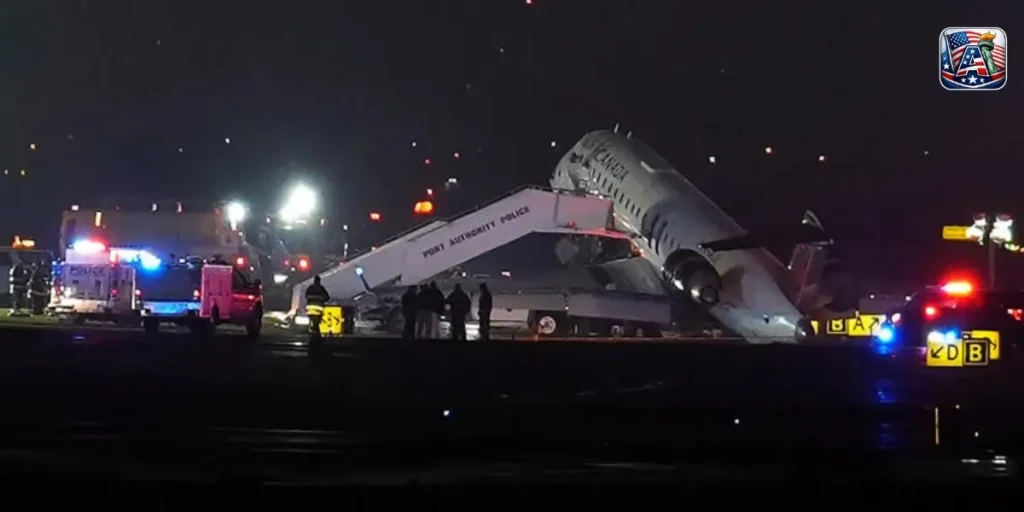
Following the crash, LaGuardia Airport immediately suspended all operations. Runways were closed, and flights were either cancelled or diverted to nearby international airports, including John F. Kennedy International Airport and Newark Liberty International Airport.
The airport remained closed into the following afternoon, reopening partially around 2:00 PM on Monday, March 23, 2026, nearly 14 hours after the incident, as crews cleared debris and hazardous materials. This closure had global ripple effects on air travel schedules, creating delays and cancellations across North America and straining an already stressed air traffic system.
Investigating the Crash: NTSB and Global Aviation Authorities
The U.S. National Transportation Safety Board (NTSB) immediately dispatched its investigative “go team” to LaGuardia to determine the exact cause and contributing factors behind the collision. Under international agreements, the Transportation Safety Board of Canada (TSB) also joined the probe, given the Canadian registry and operation of the aircraft. Read more about the Air Canada LaGuardia crash and latest updates.
Key Investigation Focus Areas
- Air traffic control communications: Controllers’ decisions and coordination between flight and ground vehicle clearances.
- Safety procedures for emergency vehicles on runways: Protocols for authorizing fire trucks and other responders during active aircraft movements.
- Runway and tower staffing levels: Whether workload, fatigue, or understaffing contributed to the timing error.
- Black box readings: Flight data recorder and cockpit voice recorder analysis to understand aircraft systems, speeds, and pilot responses before impact.
Aviation Safety in Context: Runway Incursions Are Dangerous
A runway incursion—like the one at LaGuardia—is widely recognized as one of the most dangerous types of aviation incidents because it involves conflicting movements between aircraft and ground vehicles or other aircraft on active runways. Often, multiple safety systems are designed to prevent such events, including runway status lights, ground radar systems, strict communication protocols, and redundant controller confirmations. However, when emergencies occur or controllers are managing multiple tasks simultaneously, gaps can emerge.
Broader Implications and Global Response
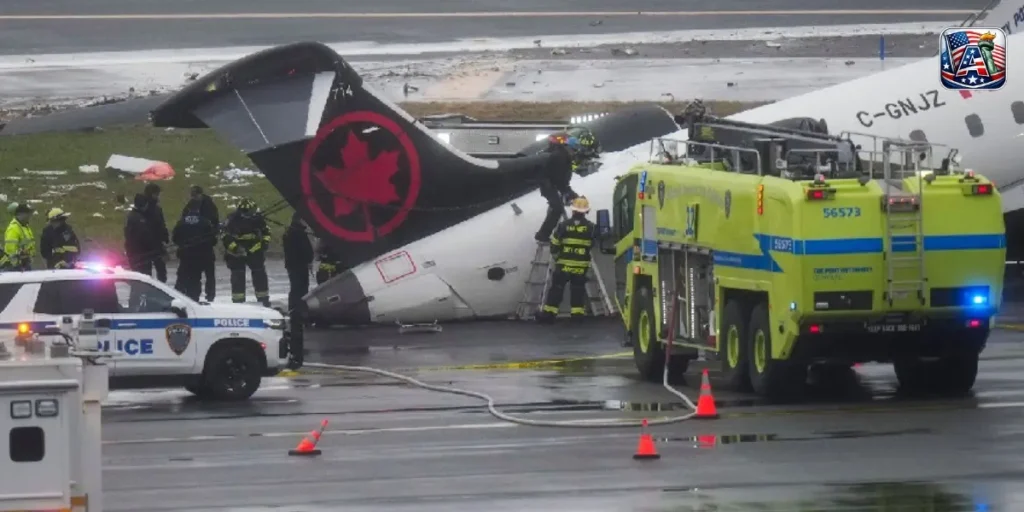
The LaGuardia collision has sparked urgent questions about air traffic control workload, ground vehicle coordination, and automation safety across major airports worldwide. Aviation experts have pointed out that mishandling emergency responses on runways—even with good intentions—requires clear protocols, strict sequencing, and constant situational awareness from all parties involved.
Some analysts suggest:
- Dedicated ground traffic control channels for emergency vehicles
- Additional safeguards and sensors to prevent runway entry when aircraft are nearby
- Advanced warning systems tied to radar and aircraft telemetry
What Happens Next?
The NTSB investigation is expected to take many months, with a preliminary report typically released within 60–90 days, and a final report possibly taking a year or more.
In the meantime:
- LaGuardia Airport operations will continue with safety reviews and runway procedure enhancements.
- Air Canada Express, Jazz Aviation, and the Port Authority will conduct internal reviews.
- Aviation authorities worldwide will be watching closely for lessons learned.
Conclusion
The tragic accident at LaGuardia Airport on March 22, 2026—where Flight AC8646 collided with a runway fire truck—stands as a stark reminder of how critical timing, communication, and safety protocols are in aviation. With the loss of two pilots and dozens injured, this event has shaken the industry and passengers alike. Investigators, regulators, and airlines must now work tirelessly to understand every detail, prevent future runway incursions, and restore confidence in one of the world’s busiest airspaces.
FAQs
What happened at LaGuardia Airport on March 22, 2026?
On the night of March 22, 2026, an Air Canada Express regional jet (Flight AC8646) collided with a Port Authority fire truck on an active runway at LaGuardia Airport while landing. The crash killed both pilots and injured dozens of passengers and crew members.
How many people were on board the Air Canada flight?
Flight AC8646 had a total of 76 people on board, including 72 passengers and 4 crew members. Two pilots died in the collision, and 41 others—including passengers, crew, and fire truck personnel—were hospitalized with varying degrees of injuries.
Who were the victims of the crash?
The two fatalities were Captain Antoine Forest and First Officer Mackenzie Gunther, both Canadian pilots. Injuries included passengers, flight attendants, and two fire truck personnel. One flight attendant was thrown from the aircraft but survived with serious injuries.
Why did the Air Canada plane collide with a fire truck?
The collision occurred due to a runway incursion, when an emergency fire truck was crossing the active runway while the Air Canada flight was landing. Miscommunication and timing errors between air traffic control and ground personnel contributed to the accident.
What is a runway incursion?
A runway incursion happens when an aircraft, vehicle, or person enters an active runway without proper clearance, creating a risk of collision. Runway incursions are considered one of the most dangerous types of aviation accidents.
Were there any survivors from the crash?
Yes. Aside from the two pilots, all other crew members and passengers survived. 41 people were hospitalized, while most passengers were later released. Emergency responders and survivors reported a chaotic but rapid evacuation from the aircraft.
What is being done to investigate the accident?
The U.S. National Transportation Safety Board (NTSB) is leading the investigation, with support from the Transportation Safety Board of Canada. Investigators are examining air traffic control communications, runway procedures, black box data, and safety protocols for emergency vehicles on runways.
How did the crash affect LaGuardia Airport operations?
The crash forced LaGuardia Airport to shut down temporarily. Flights were canceled or diverted to nearby airports, including JFK and Newark. The airport partially reopened the following afternoon after debris removal and safety checks.