
US Iran War 2026
In late February and early March 2026, the Middle East went through one of the most important events in modern history. The US and Israel’s planned military assault on Iran sparked off a chain reaction that killed people, harmed diplomatic ties, and affected the world economy. Ayatollah Ali Khamenei, the Supreme Leader of Iran, died, and violence broke out that had never happened before in a place that was already on edge after years of fighting.
After that, there were a number of fights that occurred in a short length of time. In reaction, there were missile and drone strikes, diplomatic statements from throughout the world, large protests in several countries, and serious damage to people and property. This in-depth research examines the 2026 US-Iran confrontation comprehensively, including precise updates and analyses of military operations, political reactions, regional instability, and humanitarian impacts.
What made the conflict start in 2026?
This issue has been around for some time. Iran has been fiercely against the US and Israel’s control of the Middle East since the Islamic Revolution in 1979. The government is constantly under a lot of stress, so it has to keep working on nuclear technology, building long-range ballistic missiles, and transferring money to groups like Hezbollah and Shiite militias in Iraq. Washington and Tel Aviv see Iran as a huge threat to both regional and global security because of these actions, as well as border incidents and cyberwarfare.
In 2025, there were military strikes against Iranian nuclear reactors, including airstrikes on important installations. Before things got worse in 2026, this occurred. By the beginning of 2026, US and Israeli intelligence had learned that Iran’s drones and missiles, as well as the locations of well-protected military command centers, were a major threat that needed to be dealt with immediately.
Iran’s Attack During Operation Epic Fury
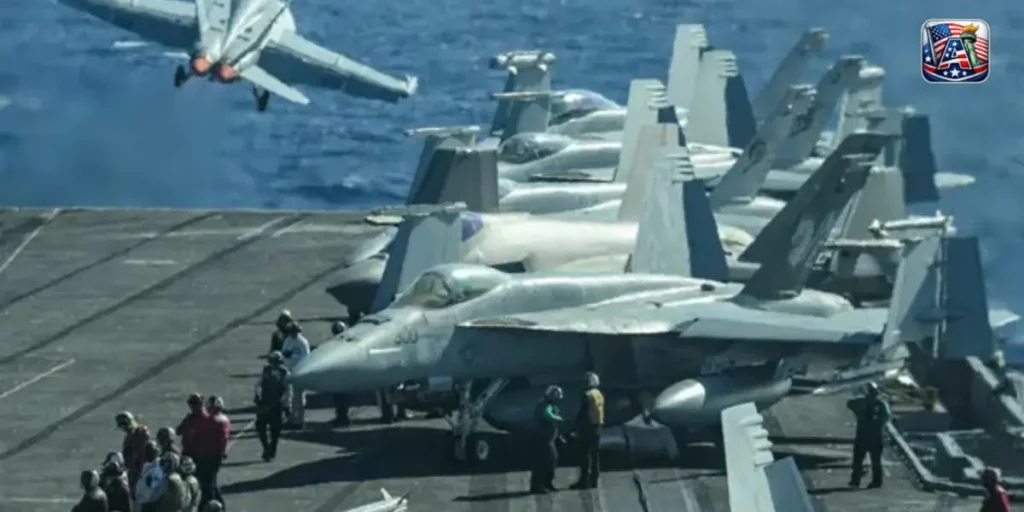
The US and Israel went to war in Operation Epic Fury, which began on February 28, 2026. The goal of this operation was to murder major political and military officials in Iran. This would make the Islamic Republic’s air and missile defence weaker and get rid of its leaders.
Israeli and American soldiers attacked many key sites in Tehran, including the home of Supreme Leader Ayatollah Ali Khamenei. Reports suggest that the operation killed Khamenei and about 40 other important Iranian military and political officials. There were also a lot of assaults against Iran’s missile launch facilities and air defence equipment. There are reports that nine Iranian military ships were sunk and that other naval stations and ships in the Persian Gulf were also assaulted.
There was a lot of information that made these strikes feasible, such the CIA’s long-term eavesdropping on Khamenei’s movements. This gave the planners a rare chance to get to him when he was in a well-known spot.
The American Military and Political Response
After the initial assaults, President Donald Trump told citizens in the US and throughout the world that Iran had reached many of its goals. He then claimed that US forces will definitely lose more men and women and that military operations would continue until all goals were met. Later, the Pentagon said that three American soldiers died and five others were critically injured during the first operations. Trump also warned that the military will keep hitting Iran until its missile capabilities were much reduced and that actions were being taken to save more lives.
High-ranking US officials made it clear that the aim was not to take over Iranian land but to get rid of threats to US forces, allies in the area, and Israel for good. Senator Tom Cotton and other US officials commented about the same thing in the news: the campaign’s key aims were military infrastructure, high-ranking commanders, and missile supply.
What happens to people when there is a calamity that hurts them?
The long-running fight between Israel, Iran, and the US has wounded a lot of people. Many individuals all across the world are dealing with disasters, having to move, and having their everyday lives turned upside down. Here are some important things to remember:
- Deaths in Israel: Iranian missiles hit Beit Shemesh, killing at least eight people, including children, and injuring many more. It was challenging for hospitals to keep up with the quantity of deaths that were happening so fast.
- Displaced foreigners: Because of problems at the airport, Americans and other visitors had to stay in Israel longer than they anticipated they would. Some people had to spend a lot of money to escape the nation by sea or through Jordan without anyone else knowing.
- Evacuations in Bahrain: When hotels were assaulted or thought to be weak, the US Embassy moved staff to safe regions.
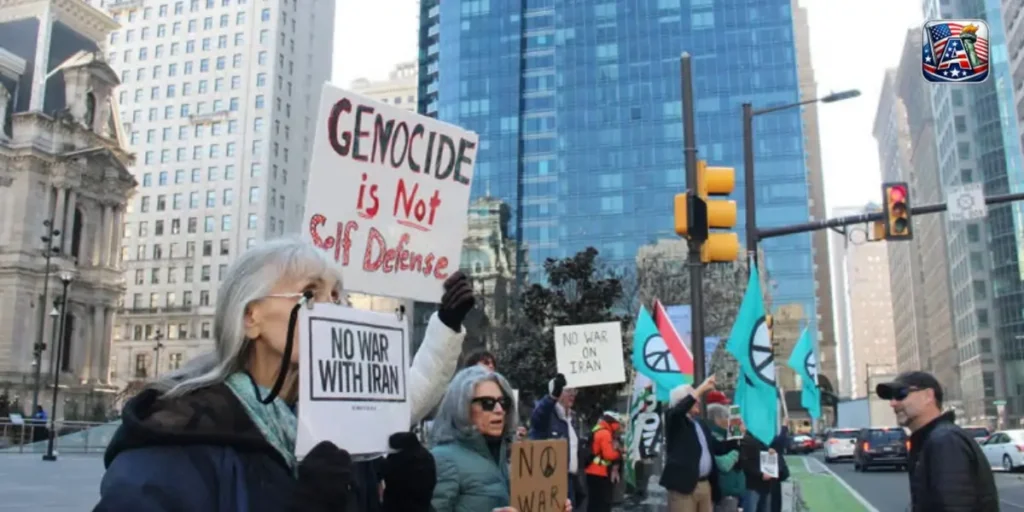
- Violence and protests: Protesters tried to attack US consulates in Pakistan, killing at least nine people and injuring more than fifty. Other countries, including Iraq and India, have seen protests like this before.
Iran’s reaction to the rising tensions in the area
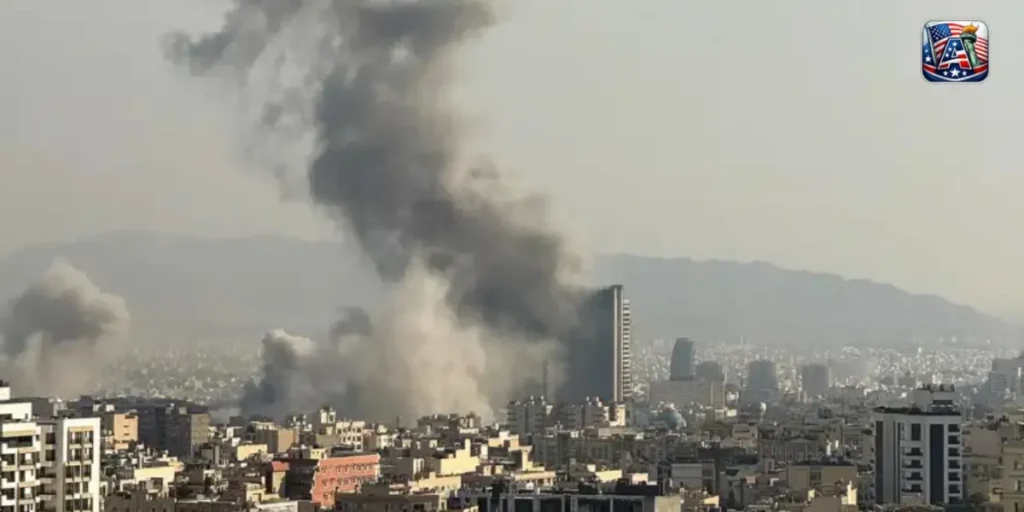
Tehran acted promptly and with purpose. Iran utilised drones and missiles to attack US military bases in Bahrain, Kuwait, Qatar, and Iraq, as well as Israeli towns like Beit Shemesh, which is west of Jerusalem. Iranian officials argued the strikes were justified since they were in retaliation to the attack on the Islamic Republic and Khamenei’s death.
Reports of deaths say that at least eight people died and several more were hurt in Beit Shemesh. Three persons from other nations were murdered in missile and drone attacks in Gulf countries, especially the United Arab Emirates. Iran’s army fired hundreds of drones and ballistic missiles into the area, which startled residents and set off modern air defence systems. People were worried that the problems would expand to other areas of the area because there were tales of activity near the Strait of Hormuz and perhaps Cyprus.
What Hezbollah is up to in the area
For the first time in more than a year, Hezbollah fired missiles into northern Israel. The violence quickly expanded to Lebanon. The Israeli army attacked near Beirut, which opened up new fronts in the war. The US-Iran conflict has greater implications since Iran uses soldiers from other nations to get what it wants in the area.
Iran also proved that it could dominate important commerce and transportation routes by attacking ships at sea, such as an oil tanker off the coast of Oman, and a port in Duqm, Oman. Many people were worried about the safety of shipping routes and energy supplies throughout the world, especially in the Gulf area where there is a lot of oil.
How it affects people and worries about human rights
The violence has harmed a lot of individuals in a lot of different countries. Rockets from Iran hit houses in Beit Shemesh, Israel, killing and injuring people, including kids. It was challenging for hospitals in and around Jerusalem to treat all the victims who were harmed terribly, moderately, or marginally.
It was challenging for people from other countries, notably Americans, because airports like Ben Gurion were still closed. A lot of individuals had to learn how to go to other countries by land or water. After the attacks in Bahrain, the US embassy staff had to leave and go to safer regions. Hotels were vacant.
Protesters tried to attack the US Consulate in Karachi, Pakistan, but there were huge crowds and fights with the police. At least nine people killed and more than fifty were wounded. This illustrates that the violence has had various effects on different people in the neighbourhood. The security situation became worse since other South Asian countries had protests like this one.
International Political Response and Diplomacy
People all across the world were quite upset when the conflict got worse, which demonstrated that it had effects all over the world. Russia backed Iran and declared that killing Khamenei was immoral and against the law in the world.
- China wants the conflict to halt right once and stated that the attacks were an attack on Iran’s freedom.
- European Union: The EU’s leaders asked for things to settle down and stated they hoped the people of Iran could make their own future better.
- Religious leaders: Pope Leo XIV encouraged everyone to cease the violence and assume moral responsibility.
- North Korea has called the US-Israeli bombardment an illegal act of war.
Iran’s religious and political reaction
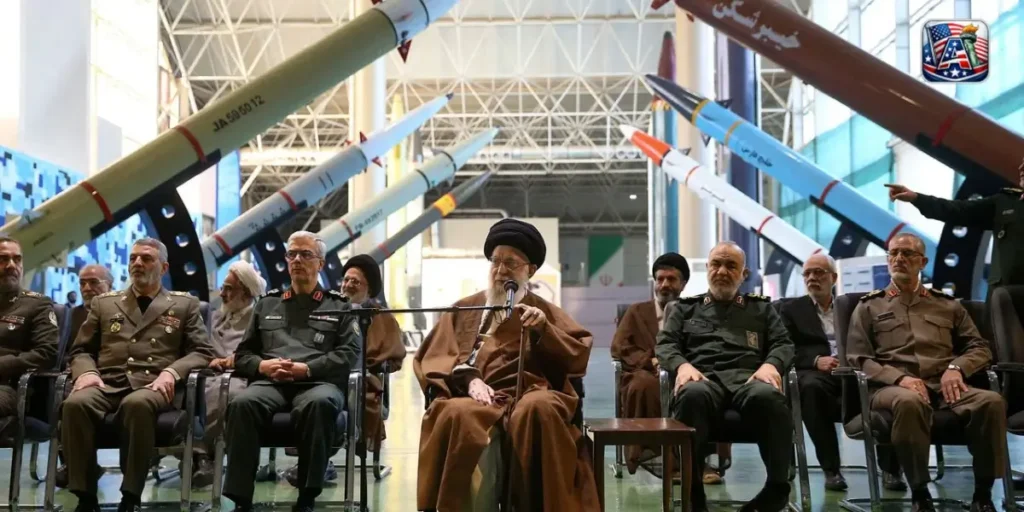
The political elite of Iran departed as soon as Khamenei died. The president, the speaker of Parliament, and the head of the courts all worked together to form a temporary ruling council. They vowed to keep Iran secure from threats from other countries and keep it in check.
In reaction, religious leaders advised people to fight back. Grand Ayatollah Naser Makarem Shirazi advised Muslims to attack the US and Israel in a fatwa to strike back at Khamenei’s death. Pezeshkian stated that the conflict was about both politics and religion, and that he had to stand up to the US and Israel.
What all the ambassadors across the world are saying
People from all across the world have said quite different things. China strongly criticised the airstrikes, calling them an assault on Iran’s independence. Russia, on the other hand, argued that Khamenei’s death was a cynical violation of human rights and international law. Both governments stated they were anxious about how safe the region was and wanted the conflict to stop as soon as possible.
Kaja Kallas, the EU’s High Representative, highlighted how crucial it is to calm things down right soon. She also remarked that they were cautiously hopeful that Khamenei’s departure would give Iranians more freedom to choose their own future. The UN stressed that everyone should be secure and that international humanitarian law should be upheld. Religious leaders, including Pope Leo XIV, asked for the violence to end and for everyone to assume moral responsibility.
Oman and other Gulf countries told their people to be careful and speak to each other through official channels. North Korea and other countries said that the US and Israel’s attacks were acts of war. Experts from all around the world suggest that this issue might have an influence on trade and markets all over the world, not only in the Middle East.
How it affects the economy and energy
The problem swiftly spread to energy markets all across the world. Worries about issues in the Strait of Hormuz, a major oil shipping route, made oil prices go higher and the stock market unstable. There was still a lot of uncertainty, even though OPEC+ members declared they would endeavour to stabilise supply. The cost of shipping insurance went up a lot, which made it tougher for trade to proceed in the area.
Travel and tourism also fell, notably in Israel and the nations nearby. Several airports shut down, hotels were evacuated, and embassies shifted throughout the area, making things hard for anyone who didn’t reside there. Everyone is affected by these modifications to normal business.
The Strategic Consequences of Intelligence.
The first strikes by the US and Israel were particularly significant because they required information, which took months of CIA spying. This let planners attack vital targets with perfect accuracy, which saved some civilian lives but hurt Iran’s military infrastructure and leadership far more. Experts, on the other hand, argue that things are still uncertain and that hardline organisations or regional proxies might make matters worse.
When US and Israeli forces blew up more over half of Iran’s missiles and vital military locations, they won a tremendous tactical victory. But there is still a lot of uncertainty about what to do next, especially because Iran’s leadership has changed and there might be attacks in the next few weeks.
How fears about energy throughout the world affect the economy
- The war has had a big effect on commerce, energy security, and markets all across the world. Oil prices throughout the world increased when shipping routes in the Gulf and Strait of Hormuz were restricted.
- Shipping problems: Iranian attacks on Omani ports and tankers made insurance more expensive and made it harder for ships to do business.
- Travel restrictions: The airport was closed, and embassies had to move, making it hard for people and companies to go about.
- Effect on business in the area: The Gulf states’ trade and economic activities were slowed down, which damaged their economy.
Read more about the 2026 U.S.–Iran war and its impact.
What might happen and what the future holds
We don’t know what will happen in the Middle East in the future. Oman and other nations may talk to each other politely, but Iran’s harsh words make it likely that they will use military action. Experts say that one of three things is likely to happen: a diplomatic settlement that stops the war, further military confrontations with other nations getting involved, or a lengthy stalemate where neither side gets an advantage.
Iran’s lack of leadership might effect the country’s destiny by backing either conservative or reformist factions, or both. Allied governments and proxy organisations are more inclined to do more in the area, which will bring in more countries and make the security situation worse.
The conflict has already hurt a lot of individuals and made a lot of others abandon their homes. People’s health and safety will always come first. The whole globe is paying close attention as the ramifications of these events become obvious.
But this was a very important event in the Middle East’s past.
The war between the US and Iran in March 2026 has a major effect on the whole world. The violence in the neighbourhood has gotten worse after Khamenei was killed and the attacks that followed. It has to do with religion, politics, and helping others. Military actions in the Persian Gulf are causing issues for people all across the world, making it hard for governments to work together, and hurting markets everywhere.
This catastrophe will change politics, oil pricing, and safety in the Middle East for a long time. The fight highlights how hard it is to find a balance between aiding people, going to war, and talking things out in a world that is getting more linked.
FAQs
Which conflicts does the US presently participate in?
Following the death of Iran’s Supreme Leader, a concerted military assault known as Assault Epic Fury/Roaring Lion was launched against the country in 2026, targeting missile installations and leadership. Today, the US is involved in military activities around the globe.
- US military support and engagement in Middle Eastern crises, such as the war in Gaza, when US soldiers protect Israel and keep the situation in the area from getting worse.
- Combat activities have drastically reduced, and a disengagement was authorised in 2026, despite the fact that there are still troops and missions in Syria.
- The United States keeps troops in other parts of the world, notably as in ongoing anti-ISIS operations, despite the fact that formal hostilities ended in the middle of the twentieth century.
Why is the United States sending troops?
- The US is sending soldiers to the Middle East to: Protect locations there and make it harder for Iran to attack the US and its allies.
- In the ongoing battle after Iran’s attack, support coordinated military efforts with Israel.
- As tensions rise in the Gulf and other nations, safeguard American assets and regional security.
- According to U.S. authorities, the war might go for weeks, so be ready for further attacks or extended operations.
When was the last time the US fought a war?
The United States has only officially declared war eleven times in its history. The most recent example was in 1942, during World War II. Since then, the US has been able to start major wars—like those in Korea, Vietnam, Iraq, and Afghanistan—without formally declaring war.
How far can Iran’s rockets travel?
Iran has many long-range ballistic and cruise missiles in its arsenal:
With a range of up to 2,000 kilometres (1,240 miles), certain ballistic missiles can hit American objectives in the Gulf and Middle Eastern targets like Israel. Short- and medium-range missiles can reach close targets, while longer-range missiles can attack bases and assets in neighbouring nations.
Is it possible for the US to implement martial law?
Martial rule is permitted in the United States, but only in the most dire situations, such as an invasion, a revolt, or a life-threatening situation. It means submitting civil freedoms and civilian authority under military control. Due to its stringent legal and constitutional restrictions, martial law has not been used very often in the past. It has not been proclaimed at the national level in recent conflicts, such the one in Iran.
Who has the finest army in the world?
The United States military is often considered the biggest and most powerful in the world in terms of size, technology, funding, and capabilities. The United States spends more on defence than any other country, and its military is seen to be the best in the world in terms of combined capability, logistics, and global reach. (Website listings consistently demonstrate the broad agreement of strategic judgements.)
Do you get paid $10,000 to join the Army?
Yes, joining the US Army often entitles you to sign-on benefits. Recruits can get bonuses of at least $10,000 for a range of roles and enlistment contracts. For some essential specialisations, the rewards might be far higher. The actual amount depends on the position, the person’s credentials, and the length of service. This is supported by standard U.S. military enlistment statistics.
Does the United States have soldiers in Israel?
It is true that the US has troops in Israel. Their main purpose in the larger war with Iran is to assist in the defence against missile and drone threats, for example, by installing missile defence systems like THAAD. F-22s and other U.S. aviation assets have also been transferred to Israel in recent weeks.