
Quick Answer (Featured Snippet Ready)
Camila Mendoza Olmos, a 19-year-old from San Antonio, Texas, was reported missing on December 24, 2025. After an intensive search involving law enforcement and community volunteers, her body was later found near her residence. Authorities concluded the investigation after the medical examiner ruled the death as suicide.
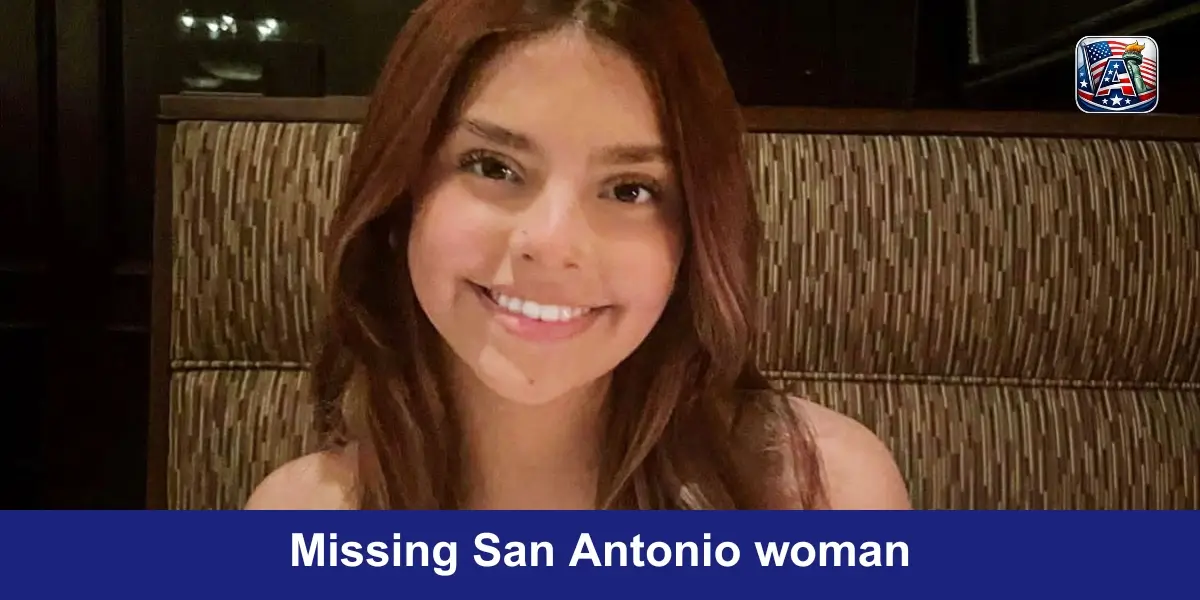
Missing San Antonio Woman
The case of Camila Mendoza Olmos became one of the most followed missing person stories in San Antonio, Texas, during late 2025. What initially began as a disappearance on Christmas Eve quickly escalated into a large-scale search operation involving local authorities, emergency alert systems, and public assistance. As the investigation progressed, new findings changed the direction of the case and eventually led to an official conclusion by law enforcement.
Who Was Camila Mendoza Olmos?
Camila Mendoza Olmos was a 19-year-old resident of northwest Bexar County, San Antonio. She lived with her family and was described by those close to her as a quiet, responsible, and family-oriented young woman. On the morning of December 24, 2025, she was last seen outside her home shortly before disappearing.
How the Disappearance Happened
According to surveillance and witness information, Camila was seen near her vehicle early that morning. She appeared to be searching for something before walking away from the area on foot.
Key early details included:
- She left behind her phone
- She did not take her car
- No immediate digital activity was recorded
- She did not inform family members
These factors made the situation immediately concerning for her family.

Why Authorities Took the Case Seriously
Due to unusual circumstances, law enforcement quickly escalated the case to a high-risk missing person investigation. A Texas CLEAR Alert was issued, which is reserved for individuals believed to be in danger or under suspicious conditions.
Authorities began reviewing:
- CCTV footage
- Dashcam recordings
- Nearby walking routes
- Residential surveillance systems
Key Evidence Found During Investigation
One of the most important developments came from dashcam footage recorded near the area. The video showed a young woman walking alone near residential streets around the same time Camila was reported missing.
While identity confirmation was not immediate, investigators stated that the timing, location, and appearance strongly suggested it could be her. This evidence supported the theory that she left the home area on foot.
Search Operation Details
The Bexar County Sheriff’s Office led a coordinated search operation supported by multiple agencies and community volunteers.
Search efforts included:
- Ground search teams
- Drone and aerial surveillance
- Neighborhood canvassing
- Field and wooded area searches
- Review of security camera networks
Despite extensive efforts, initial searches did not locate her.
Tragic Discovery Near Her Home
Several days later, authorities discovered a body in a field located very close to Camila’s residence. The area had been searched earlier, but dense vegetation limited visibility. Officials later confirmed the identity as Camila Mendoza Olmos.
Official Investigation Findings
After forensic examination, authorities concluded:
- Cause of death: gunshot wound
- Manner of death: suicide
- No evidence of foul play
- No suspect identified
Law enforcement stated that the case showed no indication of criminal involvement.

Mental Health and Investigation Context
Officials also noted that evidence suggested Camila may have been experiencing emotional or mental health struggles prior to her disappearance. While respecting family privacy, authorities emphasized that such cases often involve unseen personal challenges. This shifted public discussion toward mental health awareness among young adults.
Public Reaction and Community Response
The disappearance of Camila Mendoza Olmos quickly gained attention in San Antonio and surrounding areas, with many residents following the case closely through local news updates and social media. As the search continued, community members actively participated by sharing alerts, reviewing surveillance footage, and joining volunteer search groups.
Local residents organized small search efforts in nearby neighborhoods, fields, and walking paths in hopes of finding any clue that could lead to her location. The case also received emotional responses online, where people expressed concern and shared messages of support for the family.
After the tragic outcome was confirmed, many community members shifted focus toward mental health awareness, discussing how young individuals may sometimes struggle silently without showing visible signs of distress.
Investigation Challenges and Environmental Factors
One of the major challenges in the Camila Mendoza Olmos case was the difficulty of searching the surrounding terrain. The area near her residence included dense vegetation, uneven ground, and limited visibility, which made ground searches more complicated even for experienced search teams.
Authorities noted that such environments can significantly slow down search operations and may cause important evidence or locations to be overlooked during initial sweeps. In this case, the discovery site had already been searched earlier, but heavy brush and overgrowth made detection difficult at first. This highlighted how environmental conditions can play a critical role in missing person investigations, even when response efforts are immediate and extensive.

Why This Case Gained Public Attention
The case attracted widespread attention due to several factors:
- The victim was only 19 years old
- Sudden disappearance on a holiday morning
- Large-scale search operations
- Community involvement and social sharing
- Initial uncertainty about what happened
Timeline of Events
- Dec 24, 2025 (Morning): Last seen outside home
- Dec 24–25: Family reports missing person
- Dec 26: CLEAR Alert issued in Texas
- Dec 27–30: Search operations and footage review
- Dec 31: Body discovered near residence
- Jan 1, 2026: Identity confirmed and case officially closed
Key Takeaways
- Missing person cases can escalate rapidly
- Early response time is critical
- Mental health awareness is essential
- Even intensive searches can miss hidden areas
- Surveillance footage plays a key role in investigations
Final Conclusion
The case of Camila Mendoza Olmos remains a tragic reminder of how quickly missing person investigations can evolve. While authorities have closed the case, it has left a lasting impact on the San Antonio community. Beyond the investigation, the case highlights the importance of mental health support systems, early communication, and awareness within families and communities.
FAQs
Who was Camila Mendoza Olmos?
Camila Mendoza Olmos was a 19-year-old resident of San Antonio, Texas, who was reported missing on December 24, 2025, after she was last seen outside her home.
When did Camila Mendoza Olmos go missing?
She was last seen on the morning of December 24, 2025, near her residence in northwest Bexar County, San Antonio.
Was Camila Mendoza Olmos found?
Yes, authorities later discovered a body near her home after an extensive search operation and confirmed her identity.
What was the cause of death in the Camila Mendoza Olmos case?
According to the medical examiner, the cause of death was a gunshot wound, and the manner of death was ruled as suicide.
Did police find any evidence of foul play?
No, law enforcement stated that there was no confirmed evidence of foul play or involvement of any other person in the case.
What was the Texas CLEAR Alert in this case?
A Texas CLEAR Alert is an emergency notification issued when a missing person is believed to be in immediate danger. It was activated during Camila’s disappearance due to high-risk concerns.
Where was Camila Mendoza Olmos last seen?
She was last seen outside her home in northwest Bexar County, San Antonio, near her vehicle early in the morning.
Why did this case receive so much attention?
The case gained attention due to her young age, sudden disappearance, extensive search efforts, and the tragic outcome that followed shortly after.